Science is shrinking every day. Experts now work at a scale so small that human eyes cannot see it. This area of study is called nanotechnology. It changes how we treat sickness in our modern world. These little tools make patient care better in ways we’ve only imagined before. By working at the molecular level, we solve health problems that once seemed impossible. This shift presents a new approach to human biology and health benefits.
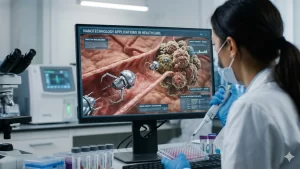
We are looking towards a future where we will be able to heal the body from the inside out with utmost precision. Doctors and scientists are excited about the potential benefits of this work as it begins to make its way into clinics and hospitals globally. This is not just a theory; this is happening in laboratories all over the world. Scientists are using these tools to solve complex biological problems that were previously impossible to solve. This small technology brings very big results.
Understanding the Nano Scale
Nanotechnology operates at the scale of atoms and molecules. A nanometer is one-billionth of a meter. To understand this, a strand of human hair is about eighty thousand nanometers wide. In this shape, substances behave in a unique way. They can change color, conduct electricity better, or be much stronger. Medical researchers use these properties to create devices that interact with the human body in specific ways. They can form organs that fit properly into our cells. This ability opens up paths that were previously closed. We are no longer limited by traditional tools. We now have the power to influence biology at the root.
Precision Medicine and Targeted Delivery
Medicine has often been a game of averages. Doctors gave the same doses to different people. This did not always work well. Many patients suffered from side effects because the medicine hit healthy parts of the body along with the sick ones. We now move toward precision. This means treatments match the specific needs of a patient.
Targeted drug delivery Nanoparticles provide the tools to make this happen. These small systems work like smart ships. These deliver the drug directly to the diseased cells. They leave healthy parts alone. By controlling how and where a drug moves, we reduce waste. We also increase results.
Using targeted drug delivery Nanoparticles changes the way we treat chronic conditions. Instead of flooding the system with a drug, we send a precise amount where it is needed. This means patients feel better. It also means they have fewer bad reactions to their treatment. This is a big win for safety and healing. It turns heavy-handed treatments into gentle, effective processes. It allows doctors to use potent drugs that would be too dangerous to use in standard forms. This method protects the heart, liver, and kidneys from the harm of strong medicine.
Revolutionizing Early Diagnosis
Catching a health problem early is key to survival. It makes treatment much easier and cheaper. Doctors now rely on Nanosensors for disease diagnosis to find problems before they grow. These devices are incredibly sensitive. They can find tiny signs of sickness in a single drop of blood or saliva.
Standard lab tests can take days. These tiny sensors offer results in minutes. They spot things that standard tools often miss. By finding a problem early, doctors can start care right away. This can save many lives.
These Nanosensors for disease diagnosis can also monitor a patient’s health at home. They send data to the doctor instantly. This remote monitoring prevents emergencies before they start. It gives people more freedom while keeping them safe. We are moving away from reactive medicine and toward prevention. The ability to monitor health in real-time is a major leap forward for patients with ongoing health needs. It removes the stress of frequent doctor visits.
Nature-Inspired Cancer Therapy
Cancer is a tough foe. Experts are finding new ways to fight it by imitating nature. They use Biomimetic nanocarriers for cancer treatment. These carriers mimic the movement and functioning of cells in the body. Since they look and act like natural organs of the body, they can trick the immune system.
The body often attacks foreign objects. Nanocarriers with a natural coating hide from these defenses. They travel non-stop in the blood. Upon reaching the tumor, they release the drug. This makes the treatment more effective.
The use of biomimetic nanocarriers for cancer also makes the treatment less toxic. This “Trojan horse” method is changing the outcome for many patients. It allows us to use stronger drugs without the usual heavy side effects. We are learning to work with biology rather than forcing our way through it. This approach provides a more humane way to handle aggressive tumors. It gives patients hope where other treatments have failed.
The Power of Smart Materials
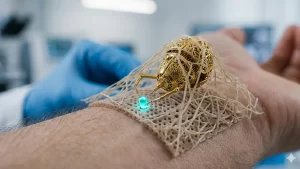
The future of medicine relies on being able to adjust to the body’s needs. We call this using smart Nanomaterials healthcare application. These materials can react to the body. They might release medicine when they sense a change in heat or pH levels.
Imagine a patch that detects a fever and releases medication to reduce it. Or, think of a surface that fills the wound by releasing growth factors only when needed. These materials work like tiny doctors who are always on duty.
The potential for smart Nanomaterials healthcare applications is vast. They do not need instructions from the outside. They read the body’s own signals and respond. This creates a loop of care that works all day and night. This makes it possible to better manage chronic diseases such as diabetes. It is also helpful in controlling the level of pain in chronic diseases. These materials change according to the environment. These provide care that is tailored to that particular moment.
Advancements in Imaging and Healing
Nanotech also helps us see inside the body. Now we use nanoparticles to improve scan techniques like MRI. These particles glow or are clearly visible in the image. These help doctors see tumors with the size of just a few cells.
In addition to imaging, we also use these devices for tissue growth. We can create structures that look like bone or skin. We put cells on these structures so that they can grow. This is very important for people with burns or broken bones. It helps the body to rebuild itself rather than just repairing the damage. This form of healing is faster and leads to better quality of life.
Addressing Safety and Regulations
Any new tech brings questions about safety. We have to ensure that these small particles do not cause any harm. Scientists have been testing these materials for years. They look at how the body breaks them down. They also study how they exit the body. The goal is to make these tools perfectly safe for everyone. We have strict rules to monitor this research. We proceed carefully to ensure that the benefits outweigh the risks.
The Path Forward
Nanotechnology is not just a future idea. It is here today. It brings hope for better tests and more precise care. The goal is to make these tools affordable for everyone. Scientists continue to test these methods to ensure they stay safe. As we learn more, healthcare will become more personal and effective. We are moving toward a world where health problems are found and fixed fast. This tiny tech will make a huge difference for our future.
Frequently Asked Questions
Q: How do medical nanoparticles interact with healthy cells?
A: These particles are designed to ignore healthy cells. They only open or release medicine when they find specific markers linked to disease.
Q: Is nanotechnology available for everyone today?
A: Many treatments are in use, but some are still in testing. Access depends on your location and the specific medical condition being treated.
Q: What happens to nanoparticles after they finish their job?
A: Most medical nanoparticles are biodegradable. The body breaks them down into natural parts. The system then removes them through normal waste processes.
Q: Can this technology replace traditional surgery?
A: In some cases, yes. These tools can treat tumors or repair tissue without big cuts. This leads to shorter recovery times for the patient.
Q: Are there risks of long-term side effects?
A: Safety is the top priority for all researchers. Before any tool enters public use, it goes through many years of strict testing to ensure it is safe.